
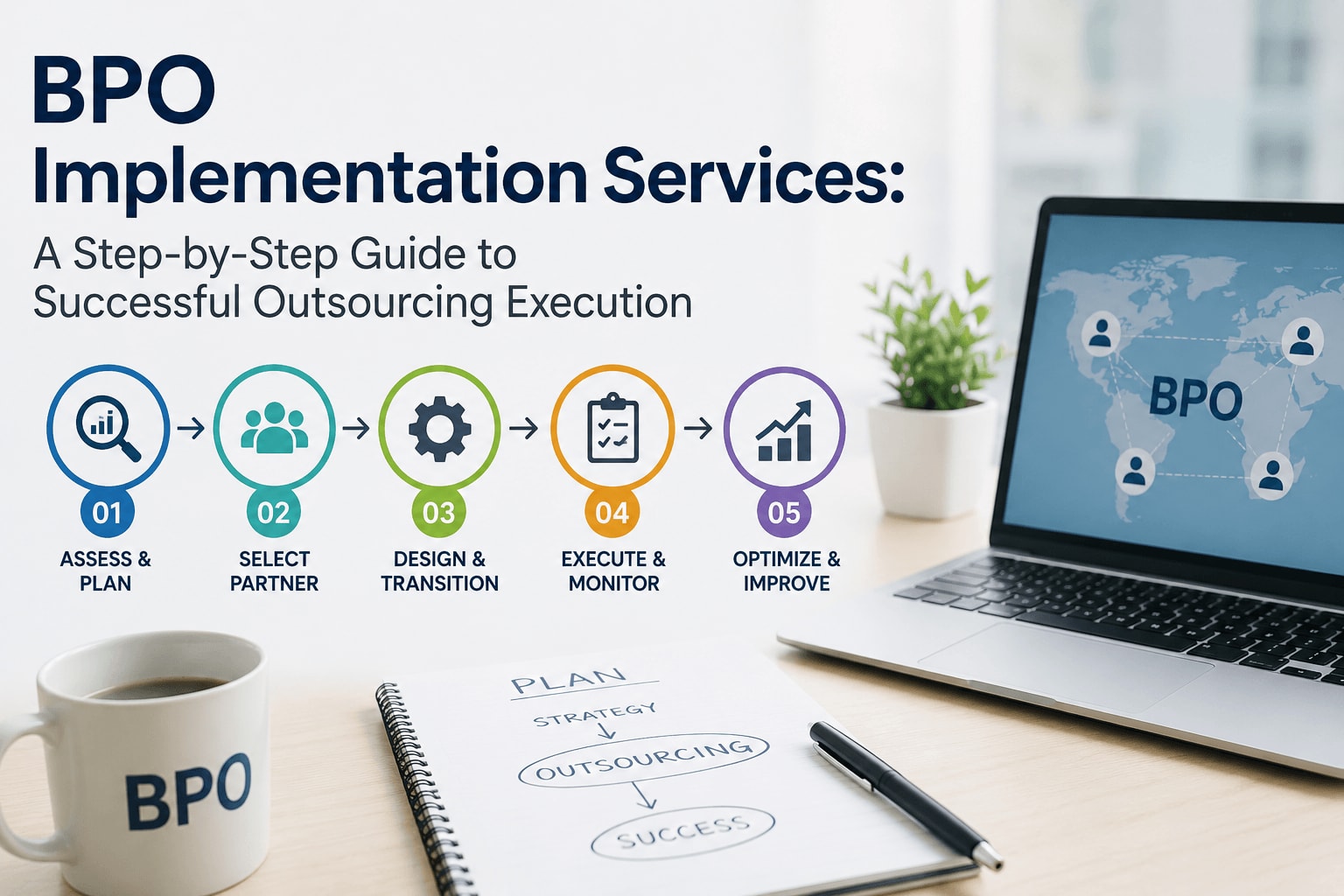
Once a business has selected the right outsourcing partner, the next critical phase is BPO implementation. This stage determines whether the outsourcing strategy will succeed or fail in real-world operations.
Even the best outsourcing strategy can fail without proper execution, transition planning, and governance. That is why BPO implementation services play a vital role in ensuring smooth operational handover, minimal disruption, and consistent performance.
At Sphere Global Solutions, we help organisations execute outsourcing transitions in a structured, risk-controlled, and performance-driven manner. This guide explains the complete BPO implementation process, challenges, and best practices for successful outsourcing execution.
What Are BPO Implementation Services?
BPO implementation services refer to the structured process of transitioning business operations from an in-house model to an outsourced service provider.
It includes planning, execution, monitoring, and optimisation of outsourced processes.
In simple terms:
It is the phase where outsourcing strategy becomes real business operations.
Why BPO Implementation Is Critical
Many organisations underestimate the importance of implementation and focus only on vendor selection. However, implementation determines:
Service quality
Operational continuity
Customer experience
Cost efficiency
Long-term success
Poor implementation can result in:
Service disruptions
Data loss or mismanagement
Employee resistance
Missed SLAs
Customer dissatisfaction
That is why structured implementation is essential.
Step-by-Step BPO Implementation Process
Step 1: Implementation Planning
The first step is creating a detailed implementation roadmap.
This includes:
Scope definition
Timeline creation
Resource allocation
Risk identification
Communication plan
A strong plan ensures alignment between internal teams and the outsourcing provider.
Step 2: Knowledge Transfer
Knowledge transfer is one of the most critical stages of implementation.
It involves transferring:
Process documentation
Operational workflows
System access
Customer data (securely)
Business rules and guidelines
A structured knowledge transfer ensures continuity and reduces operational errors.
Step 3: Process Transition Strategy
There are different transition models depending on business complexity:
Big Bang Transition (full switch at once)
Phased Transition (gradual rollout)
Parallel Run Model (old and new systems run together)
Most organisations prefer a phased or parallel approach to reduce risk.
Step 4: Training and Workforce Alignment
Training ensures the outsourced team understands business expectations.
Training includes:
Process training
Tool and system training
Customer communication guidelines
Quality standards
Compliance requirements
Proper training directly improves service quality.
Step 5: System Integration and Technology Setup
Modern outsourcing requires strong technology integration.
This may include:
CRM integration
Ticketing systems
ERP connectivity
Workflow automation tools
Reporting dashboards
Seamless integration ensures operational efficiency and real-time visibility.
Step 6: Pilot Testing Phase
Before full-scale rollout, a pilot phase is conducted.
This helps to:
Identify process gaps
Test workflows
Measure performance
Fix operational issues
Pilot testing reduces risk before full deployment.
Step 7: Full-Scale Implementation
After successful testing, full operations are transitioned.
Key activities include:
Complete process handover
Live operations monitoring
SLA tracking
Performance reporting
This is the official start of outsourced operations.
Step 8: Performance Monitoring and Optimisation
Implementation does not end at go-live.
Continuous monitoring ensures:
SLA compliance
Quality assurance
Productivity tracking
Issue resolution
Process improvements
This stage ensures long-term outsourcing success.
Key Challenges in BPO Implementation
1. Poor Communication Between Teams
Miscommunication between internal teams and vendors leads to delays and errors.
2. Inadequate Knowledge Transfer
Incomplete documentation can disrupt operations.
3. Resistance to Change
Employees may resist outsourcing due to job security concerns.
4. System Integration Issues
Technical incompatibility can delay implementation.
5. Weak Transition Planning
Lack of structured planning increases operational risks.
Best Practices for Successful BPO Implementation
1. Define Clear Objectives
Set measurable goals before implementation begins.
2. Create Detailed Documentation
Ensure all processes are clearly documented.
3. Use Phased Transition Approach
Reduce risk by transitioning gradually.
4. Establish Strong Governance
Set up reporting structures and escalation mechanisms.
5. Monitor KPIs from Day One
Track performance continuously after go-live.
Role of BPO Consulting in Implementation
A BPO consulting company plays a crucial role in ensuring successful implementation.
They help businesses:
Design transition strategies
Manage vendor coordination
Oversee knowledge transfer
Reduce operational risks
Monitor early-stage performance
This ensures implementation is structured and controlled.
Benefits of Professional BPO Implementation Services
Reduced Operational Risk
Structured planning reduces chances of failure.
Faster Go-Live
Experienced consultants accelerate implementation timelines.
Improved Service Quality
Proper training ensures better performance.
Better Customer Experience
Smooth transitions prevent service disruptions.
Stronger Vendor Alignment
Clear governance improves collaboration.
Why Choose Sphere Global Solutions?
At Sphere Global Solutions, we provide end-to-end BPO implementation services designed to ensure smooth and successful outsourcing transitions.
Our Expertise Includes:
Implementation planning and roadmap design
Vendor coordination and governance setup
Knowledge transfer management
Process transition execution
AI-driven workflow integration
Performance monitoring and optimisation
What Makes Us Different:
Structured implementation frameworks
Industry-specific expertise
Risk-controlled transition models
Focus on measurable outcomes
Continuous optimisation approach
We ensure that outsourcing is not just planned—but successfully executed.